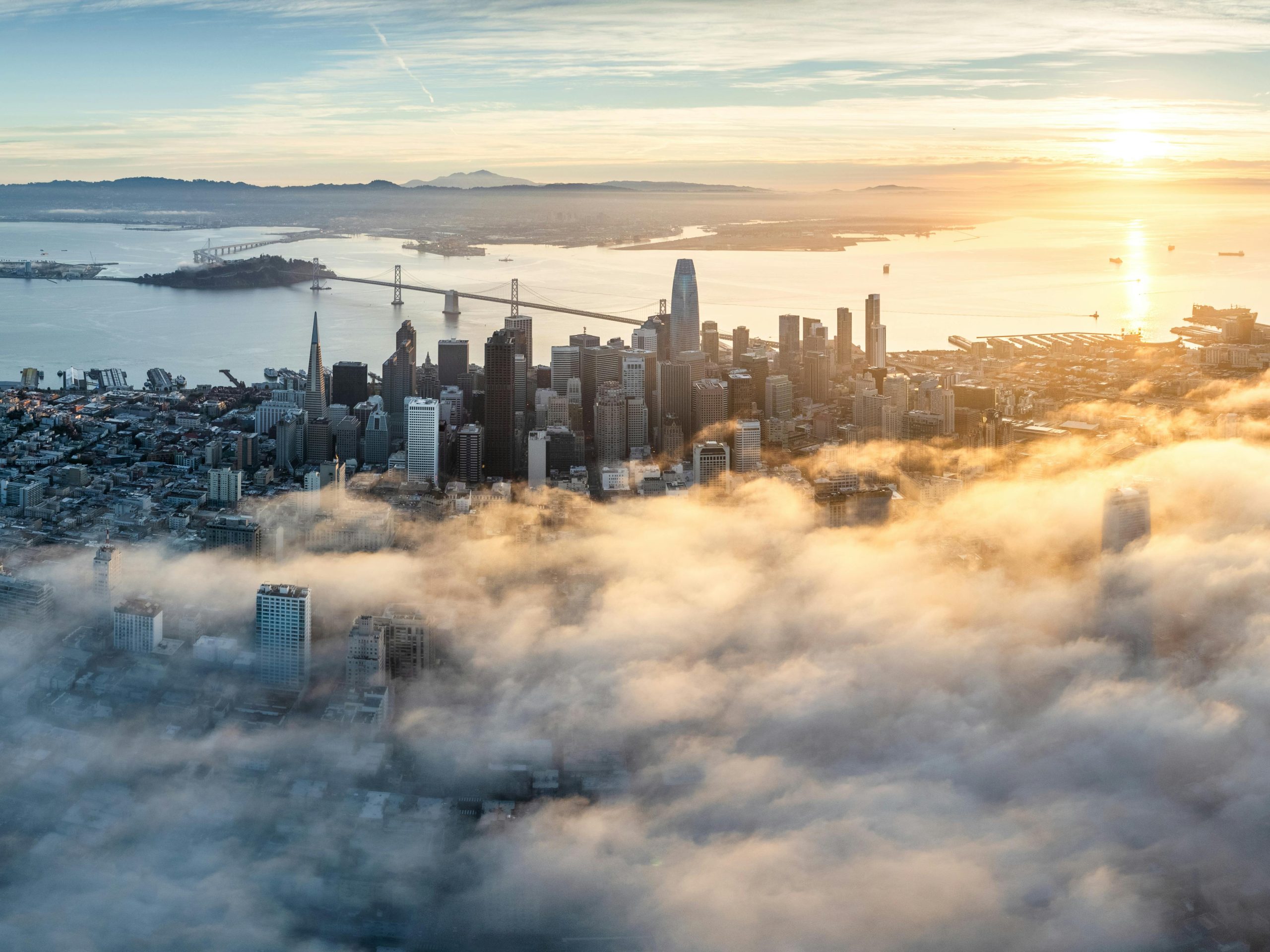
What the March 2026 data means for every buyer and seller in San Francisco — and why the next 90 days may be the most consequential window in a generation.
The San Francisco real estate market is not in a cycle. It’s in a collision — a collision between an historic shortage of homes and a tidal wave of AI wealth, unlike anything this city has seen before — and that’s saying a lot in a place where eye-popping real estate prices have been the norm for years. And if you are a buyer or a seller sitting on the sidelines right now, waiting for things to “settle down,” you may be making the most expensive decision of your life.
Here’s what the data is telling us

Those numbers deserve a double-take. A 23% average overbid on houses. A 380% year-over-year jump in luxury condo closings. A median house price that has not just recovered from its post-pandemic softening, but has surpassed every previous high on record. These are not the statistics of a market heating up. They are numbers that reflect a market already running white-hot, with more fuel being added.
THE WAVE THAT HASN’T LANDED YET
These numbers are mostly a result of buyers already on the ground: AI insiders who have been in San Francisco for years, quietly accumulating equity in privately held AI companies, and who have now converted that equity into real estate. And they’re just the early movers.
The larger wave hasn’t even hit.
Goldman Sachs has estimated that the AI companies expected to go public this year carry a combined valuation of roughly $160 billion. The firms at the top of that list, including OpenAI, Databricks, and Anthropic, are headquartered not in Menlo Park or Cupertino, but in San Francisco itself. When those IPOs close, the beneficiaries won’t be commuting into the city. They’ll be trying to buy into it.
This is a structurally different situation from the tech booms of previous decades, when wealth creation was concentrated along the Peninsula corridor, and demand radiated outward into specific, commute-friendly SF neighborhoods. Today, every part of the city is a target.
And that’s before a single major AI company has gone public.
IF YOU’RE THINKING ABOUT BUYING A HOME IN SAN FRANCISCO
The instinct to wait…to let things stabilize…to see how the IPOs actually shake out, is understandable. It is also, based on everything the data is telling us, likely to cost you.
Right now, you are competing with a manageable number of motivated buyers. Six months from now, you may be competing with hundreds of newly liquid tech employees who have been mentally rehearsing this purchase for two years, are flush with cash, and are prepared to move fast and pay whatever it takes. The people buying today aren’t doing so impulsively. They’re doing the math on what it will cost if they wait.
Properties are going under contract in days, sometimes without even one open house. If you are not financially prepared and ready to move when something right appears, you will spend the next year watching homes you wanted go to buyers who were.
None of this means you should overpay recklessly. It means the cost of hesitation is real and measurable, and in this market, it compounds quickly.
IF YOU’RE THINKING ABOUT SELLING A HOME IN SAN FRANCISCO
You are sitting on one of the most favorable seller’s markets this city has produced in at least four years. Inventory is down 28% from last year. Price reductions have dropped 39% year-over-year. The buyers who are actively searching right now are qualified, motivated, and acutely aware that their competition is about to get much stiffer.
What that means practically: well-prepared listings are moving in under a month, frequently attracting multiple offers, and regularly closing north of the asking price by hundreds of thousands of dollars.
Seller beware, though: if you plan to sell and then buy within the same market, you will need a thoughtful plan to move through that transition. The same conditions that make selling attractive right now make buying challenging. This is solvable, but it requires a full-picture strategy.
WHAT COULD GO WRONG?
Of course, no market moves in only one direction. AI valuations carry real uncertainty. A policy shock, a correction in tech equities, or a broader economic disruption could alter the trajectory of what’s anticipated. These are legitimate variables.
But what doesn’t change regardless of how the IPO calendar unfolds is the fact that San Francisco has a long-running inventory deficit. Years of constrained construction haven’t helped either. Demand doesn’t have to reach a theoretical ceiling to overwhelm a market that is this undersupplied. Even a partial IPO wave (in a market already down 28% in listings) would pour accelerant on conditions we’re already watching play out currently.
The question worth asking yourself isn’t whether the market will peak eventually. Everything does. The question is whether, given your specific situation, the cost of waiting outweighs the discomfort of acting. For most buyers and sellers I’m talking to right now, it does.
Let’s look at your specific situation.
30 minutes, no pressure, no pitch. Whether you’re buying, selling, or still deciding which comes first — let’s build a clear picture together.