Every generation thinks the market has gone too far. History keeps proving them wrong.
San Francisco home prices just hit a record $2,150,000. To a lot of people, that number sounds like a ceiling. History suggests otherwise…
Think back to 1995, when the average San Francisco home crossed $300K for the first time. Or in 2012, when prices recovered past $600K after the financial crisis, and people swore the market had finally gotten ahead of itself. Or in 2019, when a million-dollar condo started feeling routine, and buyers wondered how much further it could possibly go.
It kept going. As it always has.
A City Built on Boom and Reinvention
San Francisco has been left for dead more times than anyone can count. The Gold Rush ended. The 1906 earthquake leveled the city. The dot-com bubble burst and left empty offices littered throughout SoMa and the Financial District. The pandemic triggered an exodus that generated national headlines about the city’s imminent collapse.
Each time, the obituaries were wrong.
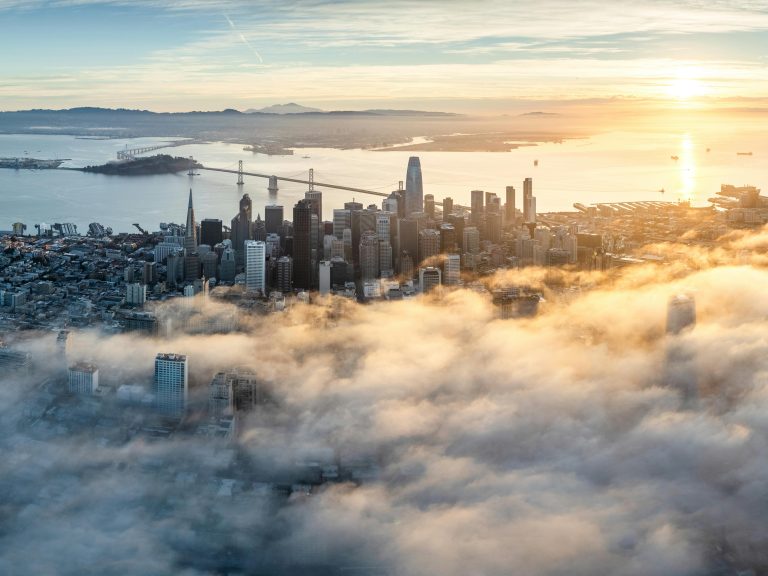
What the doom narratives consistently underestimate is the compounding advantage of San Francisco’s geographic and economic position. The city sits at the tip of a peninsula, surrounded by the Pacific Ocean and the bay on three sides. You cannot build your way out of that constraint. And the demand side of the equation keeps finding new reasons to concentrate here.
The Gold Rush made San Francisco the financial capital of the West. The railroad era cemented it. The dot-com boom rewrote it. And now AI is the most consequential technological shift in a generation, and is centered not in Silicon Valley, but in San Francisco itself.
OpenAI, Anthropic, Databricks, and dozens of the most heavily funded AI companies in the world are headquartered within the city limits. The wealth being created is not commuting in from the peninsula — it is living here, spending here, and competing for the same limited housing stock the rest of the city is competing for.
What Inflation Does to Real Estate Over Time
There is a quieter force at work alongside the technology economy, and it affects every buyer, whether they think about it or not. That force is inflation.
Inflation does not just raise prices at the grocery store. It gradually erodes the purchasing power of cash sitting in a savings account. It increases construction costs, which suppresses new housing supply. It raises wages, which increases what buyers can bid. And over long periods of time, it reliably rewards people who own scarce assets…and punishes those who wait.
San Francisco renters experienced this acutely during the pandemic years. Many chose to rent rather than buy, watching from the sidelines as home values appreciated faster than their savings and down payments could grow. The math worked against them because they underestimated how quickly inflation could widen the gap between where renting and buying.
The Property Ladder Still Works — If You Get On It
One of the most durable wealth-building strategies in San Francisco has nothing to do with timing the market perfectly. It has to do with getting on the property ladder and staying on it.
A one-bedroom condo in the Tenderloin bought in 2010 became the equity that funded a two-bedroom in the Mission in 2016. That two-bedroom became the down payment on a single-family home in Glen Park in 2022. Each step up happened not because the buyer was a savvy investor, but because they owned an appreciating asset during a period of inflation and economic growth, and the market did the heavy lifting for them.
Homeownership in San Francisco works this way because it combines three things that few other investments offer simultaneously: leverage through a fixed-rate mortgage, appreciation on the full value of the asset, and inflation gradually reducing the real cost of that fixed monthly payment over time. Add the tax advantages, like mortgage interest deductions and capital gains exclusions on primary residences, and the math becomes even more compelling over a long enough horizon.
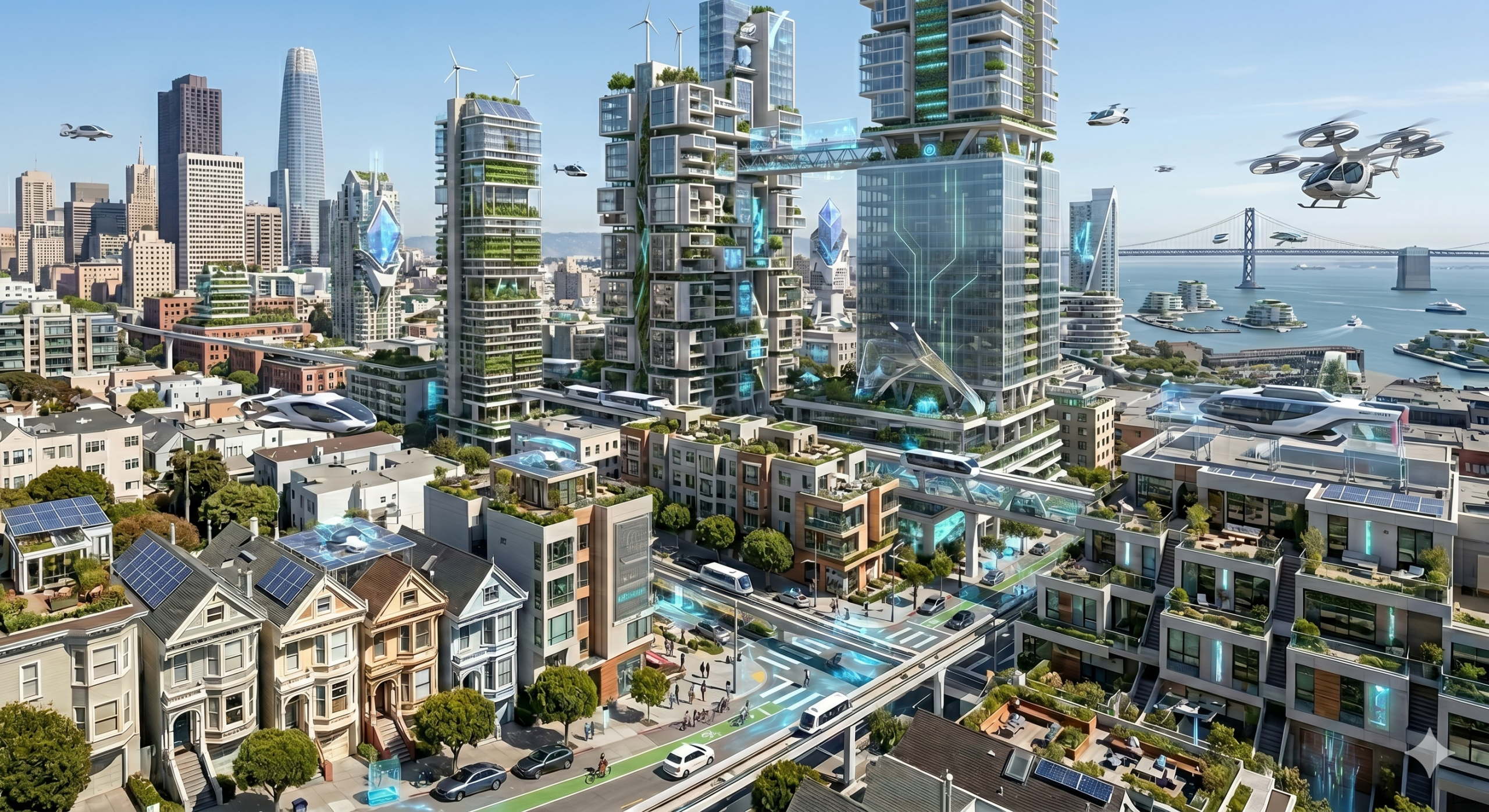
Will the average San Francisco home really cost $5 million by 2050?
Nobody knows. Anyone who tells you otherwise is selling something.
What we do know is that San Francisco has never permanently lost its economic footing. It has been disrupted, depopulated, and declared irrelevant, and still comes back each time with more momentum than before. The current AI cycle is not a repeat of previous tech booms. The companies driving it are younger, the valuations are larger, and unlike the dot-com era, the primary beneficiaries are concentrated inside city limits rather than spread across a 50-mile corridor.
The supply constraints are not going away either. The factors driving demand are getting stronger, and inflation keeps running regardless of what the local real estate market does in any given quarter.
The lesson San Francisco has taught every generation of buyers who paid attention is the same one it’s teaching right now: the prices that feel unreasonable today have a way of looking conservative twenty years from now. The buyers who acted — even imperfectly, even at what felt like the wrong time — built wealth. The ones who waited for a better entry point often found themselves waiting still.